NASA’s Roman Space Telescope: Unlocking the Mysteries of Dark Matter and Distant Worlds
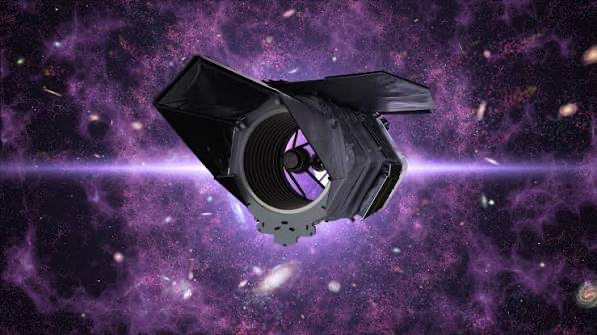
Following its successful liftoff aboard a SpaceX Falcon Heavy rocket from NASA’s Kennedy Space Center, NASA’s Nancy Grace Roman Space Telescope is currently making its journey toward the Sun-Earth Lagrange Point 2 (L2). Named after NASA’s first chief astronomer—the “Mother of Hubble”—this flagship observatory is designed to transform our understanding of cosmic acceleration, the distribution of dark matter, and exoplanet demographics.
Engineers recently activated Roman’s 300-megapixel Wide Field Instrument (WFI), marking a key step as the spacecraft undergoes its multi-month commissioning process in deep space.
1. A Panoramic Eye on the Universe
While the James Webb Space Telescope (JWST) excels at targeted “pinhole” observations of faint, individual cosmic objects, Roman is engineered for rapid, wide-angle deep-space surveys. Utilizing a 2.4-meter primary mirror paired with 18 high-resolution 4K infrared detectors, its field of view is at least 100 times larger than Hubble’s at comparable infrared sharpness.
| Mission Feature | Hubble Space Telescope | James Webb (JWST) | Nancy Grace Roman |
| Primary Mirror | 2.4 meters | 6.5 meters | 2.4 meters |
| Primary Wavelengths | UV, Visible, Near-IR | Near-IR, Mid-IR | Near-Infrared |
| Field of View | Baseline (1×) | Targeted deep-field views | 100×+ Hubble’s field of view |
| Primary Scientific Focus | General astrophysics | Deep universe & exoplanet atmospheres | Dark matter, dark energy, & galactic surveys |
2. Unlocking Dark Matter and Mapping Exoplanet Worlds
Roman carries two primary instruments designed to address fundamental questions in modern astrophysics:
The Wide Field Instrument (WFI)
The WFI acts as a giant wide-angle camera capturing vast swathes of the sky in a single exposure. Over its primary 5-year mission, Roman will map hundreds of millions of galaxies and track how dark matter—the invisible mass structuring the cosmos—exerts gravitational pulls on visible matter over cosmic time. By studying the faint distortion of distant galaxy shapes through gravitational lensing, researchers can construct a high-resolution 3D map of the universe’s dark matter framework.
The Coronagraph Instrument (CGI)
Serving as a technology demonstrator, Roman’s Coronagraph uses an intricate system of internal masks and deformable mirrors to filter out starlight glare. This allows astronomers to directly image giant exoplanets and surrounding planet-forming disks. In tandem with gravitational microlensing surveys, Roman is projected to uncover thousands of planetary systems, ranging from worlds orbiting far from their host stars to rogue planets drifting through interstellar space.
3. Mission Timeline and Next Steps
Stationed roughly 1 million miles (1.5 million kilometers) from Earth at L2, Roman is completing operational checks, thermal stabilization, and optical alignments:
- Late 2026: Final orbital insertion at L2, instrument calibrations, and optical focus testing.
- Early 2027: Release of initial science-grade images and start of primary wide-field survey campaigns.
By surveying the sky thousands of times faster than Hubble, the Nancy Grace Roman Space Telescope will assemble petabytes of observational data—cataloging billions of stars and creating an unprecedented dataset of the dynamic universe.
Related Post