Evolution of Smart Glasses: Why AI-Powered Eyewear Is Replacing Bulky VR Headsets
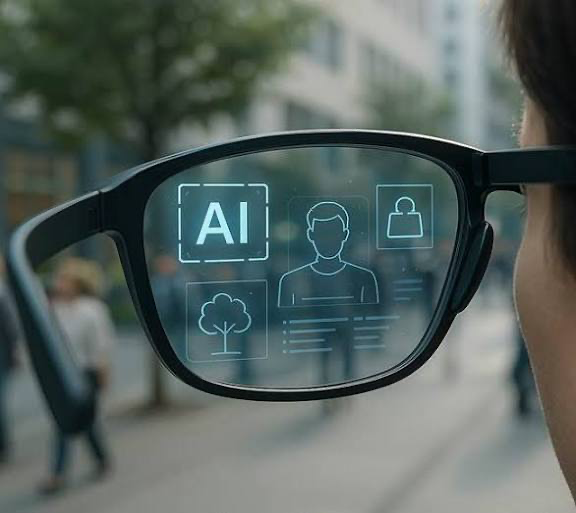
For years, spatial computing relied on heavy virtual reality (VR) and mixed reality (MR) headsets. While immersive headsets found a niche in gaming and specialized industrial training, their high cost, physical weight, and short battery life limited everyday consumer adoption.
Today, a significant hardware shift is taking place across the personal technology market. Leading consumer tech brands are pivoting toward lightweight, display-less AI smart glasses. Designed for ambient voice interaction, hands-free photo and video capture, and all-day comfort, these streamlined frames represent the next major evolution in mobile computing.
Here is an in-depth look at why AI smart glasses are trending, how display-less hardware solves previous usability challenges, and what consumers need to consider before buying.
1. The Strategic Shift: Ditching Displays for All-Day Comfort
Early smart glasses struggled with consumer adoption primarily because manufacturers attempted to pack micro-projectors, optical prisms, and high-resolution displays into traditional frame designs. The result was heavy eyewear, severe battery drain, and thermal throttling.
By removing built-in display panels, current-generation AI frames deliver three major hardware advantages:
- Standard Eyewear Weight: Display-less frames generally weigh between 45 to 60 grams—virtually indistinguishable from traditional prescription glasses or designer sunglasses.
- Extended Battery Efficiency: Without energy-intensive display components, battery usage is dedicated entirely to background AI processing, spatial microphones, and high-definition cameras.
- Natural Social Interaction: Without glowing optics or tinted visors obscuring the wearer’s eyes, social eye contact remains completely unobstructed in public settings.
Instead of visual pop-ups, these frames utilize open-ear directional audio. Users hear notification summaries, navigational turn-by-turn prompts, and AI responses while remaining fully aware of surrounding ambient sounds.
2. Multimodal AI and Voice-First Computing
The widespread adoption of AI-powered smart glasses is closely linked to rapid advancements in multimodal artificial intelligence.
Smartphone interactions require users to physically pull out a device, unlock the screen, and type inputs. AI smart glasses streamline this workflow using voice-first commands and real-time visual processing:
- Real-Time Visual Search: Built-in ultra-wide camera sensors allow the integrated AI assistant to analyze what the user is looking at. Wearers can ask questions about landmark history, object identification, or foreign language text translation directly through voice prompts.
- Hands-Free Contextual Assistance: The combination of microphones and POV cameras creates a continuous feedback loop, allowing the assistant to provide step-by-step vocal instructions for everyday tasks without requiring a handheld device.
3. High-Definition Point-of-View (POV) Capture
In addition to artificial intelligence features, high-definition camera integration meets growing consumer demand for seamless content creation. Smart glasses allow users to record first-person photos and high-resolution video clips with a single touch or voice command, eliminating the need to hold a smartphone during live events, travel, or outdoor activities.
Comparison: VR Headsets vs. AI Smart Glasses
| Feature Category | VR / Mixed Reality Headsets | Display-Less AI Smart Glasses |
| Primary Use Case | Immersive digital gaming & spatial screens | Ambient daily assistance & hands-free media |
| Form Factor & Weight | ~400g – 600g+ (Head-mounted strap) | ~45g – 60g (Standard spectacle frames) |
| Primary Control Inputs | Hand-tracking, controllers, eye-tracking | Voice commands, touch-sensitive frame controls |
| Display Technology | Micro-OLED / LCD spatial panels | None (Audio-first notification delivery) |
| Environment Suitability | Indoor / stationary environments | Outdoor / all-day public wearability |
The Future Outlook for Wearable AI Hardware
As battery density improves and on-device machine learning chips become more efficient, display-less smart glasses are positioning themselves as a practical alternative to smartwatches and handheld devices. By prioritizing functional style, ergonomic comfort, and practical utility over full spatial immersion, wearable AI frames are defining the next era of personal consumer tech.
Related Post