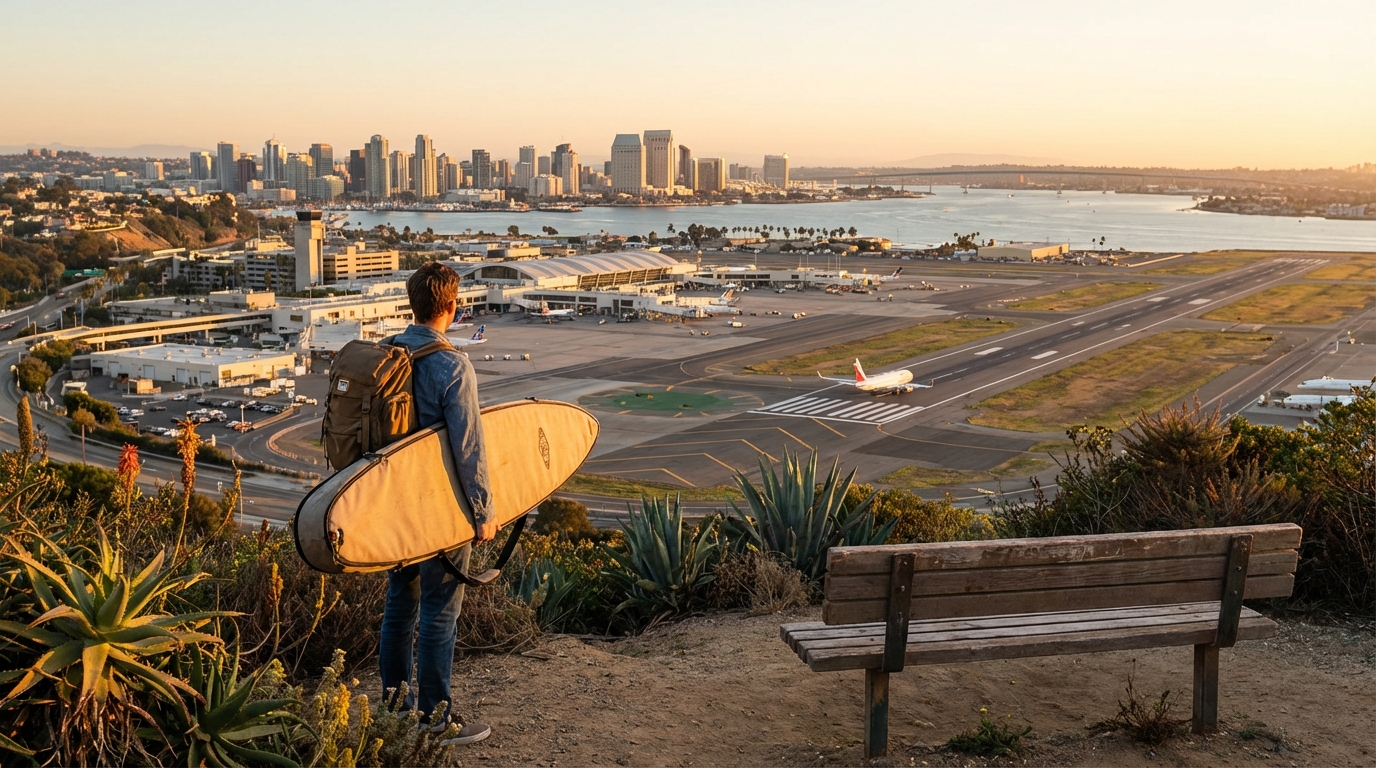
Imagine landing so close to a city skyline that you feel like you could reach out and touch the buildings. That is the reality when you fly into San Diego International Airport, a place where the runway ends and the downtown fun begins in just minutes. It is the busiest single-runway airport in the country, but there is much more to this spot than just its impressive hustle.
Whether locals still call it Lindbergh Field or you just know it as the gateway to the Gaslamp Quarter, this airport has a personality all its own. It is quirky and convenient, but knowing how to handle the terminals and the unique coastal weather makes a huge difference. You will find that getting from the tarmac to your hotel is faster here than almost anywhere else in the US.
This guide walks you through everything from terminal maps and easy bus routes to the best spots for your pets to stretch their legs. We also look at the massive upgrades coming soon and how to stay ahead of any travel delays. By the time you finish, you will be ready to arrive like a local.
Welcome to San Diego: The Airport That is Practically Downtown
Have you ever looked out an airplane window and felt like you could reach out and touch a skyscraper? That is the standard greeting when you fly into San Diego. While most major cities tuck their airports away in distant suburbs, San Diego International sits just three miles from the heart of downtown. It is a bit of a thrill ride that drops you right into the action.
Longtime locals still call it Lindbergh Field, a nod to the city's deep aviation roots. But do not let the single runway fool you. This place is a powerhouse, ranking as the busiest one-runway airport in the United States and the third busiest in all of California. It handles over 20 million passengers a year, which is a lot of traffic for such a compact footprint.
This unique setup means you can go from the gate to a fish taco stand in minutes. But there is a trade-off. Being so close to the coast and the city center means weather and space limits sometimes cause a headache. It is a quirky, high-energy gateway that perfectly matches the vibe of the city it serves.
Key insights:
- San Diego International is the busiest one-runway airport in the country, handling over 20 million people annually.
- The airport's location just 3 miles from downtown makes it one of the most accessible major travel hubs in the US.
The One-Runway Wonder: How San Diego Keeps Things Moving
Ever wonder how a single strip of pavement handles twenty million people a year? It sounds like a recipe for a total meltdown, but San Diego International pulls it off every single day. Still known to many locals as Lindbergh Field, this airport holds the title of the busiest single-runway airport in the United States. While it is the third-busiest spot in California, it operates with a fraction of the landing space you would find in big hubs like Los Angeles or San Francisco.
The secret to its efficiency is also its biggest challenge: location. Being just three miles from downtown makes it incredibly convenient for travelers, but it leaves zero room for expansion. Every takeoff and landing has to be timed with surgical precision. When things go right, it is a marvel of modern logistics. But when you pack that many people into such a tight footprint, the margin for error is razor-thin. This is why you often see planes lined up like pearls on a string during the evening rush.
Lately, that thin margin has been tested by more than just traffic. Between nationwide staffing shortages and intermittent federal funding issues, the airport is feeling the squeeze. A senior official recently noted that key roles, from TSA agents to air traffic controllers, are often under-resourced. This means that even on a sunny day, you might see longer security lines or planes waiting just a bit longer on the taxiway than they used to. It is a reminder that even the most efficient systems have their breaking points.
What happens when the weather hits? Because the airport sits right on the coast, it is vulnerable to sudden shifts in the atmosphere. Take April 13, 2026, for example. A series of coastal gusts hitting 50 knots forced the airport to halt traffic entirely. By the end of the day, 141 flights were delayed and two were canceled. When winds hit those 45 to 50 knot safety thresholds, the single runway essentially becomes a no-go zone because the risk to landing aircraft is simply too high.
If you find yourself traveling during a storm, the best move is to stay glued to your airline app for real-time updates. Since SAN is a major hub for carriers like Southwest in Terminal 1 and Delta or Alaska in Terminal 2, a delay here ripples across the whole West Coast. If you do end up stuck, remember that downtown is just a quick bus ride away on the 992 line. It is a small consolation, but being three miles from the city center is much better than being stranded in the middle of nowhere.
Key insights:
- San Diego International is the busiest one-runway airport in the country, serving 20 million passengers annually.
- The airport's proximity to downtown is a major convenience but prevents any physical expansion of the airfield.
- Coastal winds reaching 45 to 50 knots can completely halt operations, as seen during the major delay event in April 2026.
- Staffing shortages among TSA and air traffic controllers have added extra pressure to an already busy flight schedule.
What Happens When the Weather Hits?
Ever wonder why a little breeze causes such a stir at San Diego International? Because the airport sits just three miles from downtown and runs on only one runway, there is no room for error when the weather turns. It is the busiest single-runway airport in the country, so even a small hiccup ripples through the whole day. When coastal gusts hit that 45 to 50 knot mark, safety thresholds usually mean air traffic comes to a temporary halt.
We saw this play out on April 13, 2026. A mix of rough weather and staffing issues led to 141 flight delays and two cancellations. It was a long day for many, but it shows how fragile a tight operation can be. Whether you are flying Southwest out of Terminal 1 or Delta from Terminal 2, everyone shares that same strip of asphalt. When the wind howls, every airline feels the pressure and the wait times climb fast.
What does this mean for your trip? Since the airport is so close to the city, you might want to stay at your hotel longer, but things move fast once the wind dies down. Keep an eye on real-time flight tracking tools to stay ahead of the crowd. A quick check on your phone can save you from a long wait on the floor at Lindbergh Field while the weather clears up.
Key insights:
- San Diego is the busiest one-runway airport in the U.S., making it highly sensitive to weather shifts.
- Safety rules pause flights when coastal wind gusts reach the 45 to 50 knot range.
- The April 2026 event proved that staffing issues combined with weather can delay over 140 flights in a single day.
Getting Around: From the Tarmac to the Gaslamp in Minutes
Have you ever landed at an airport and realized your hotel is still an hour-long trek away? San Diego is the exact opposite. Because the airport sits just three miles from downtown, you can go from the tarmac to a seat in the Gaslamp Quarter in about ten minutes. It is a rare perk for such a major hub, especially since this is actually the busiest one-runway airport in the country. You get the convenience of a compact layout combined with the energy of a city that welcomes over 20 million people every year.
This proximity really changes how you can plan your trip. If you are staying central, you might not even need a rental car. Between quick rideshares and the walkable nature of the waterfront, you can save a lot of money and avoid the headache of expensive downtown parking. Of course, if you are heading up to the North County beaches, you will still want your own wheels. In that case, the airport runs constant shuttles to a consolidated rental car center, which helps keep the terminal traffic from getting too messy.
For those who want to save their cash for fish tacos and local brews, the MTS 992 bus is a total win. It picks up right outside the terminals and runs every 15 minutes on weekdays. It is a cheap, reliable way to reach the Santa Fe Depot, where you can connect to the trolley or the Pacific Surfliner train. Whether you are hopping on an inter-terminal shuttle or catching the bus to the Blue Line, getting around is surprisingly straightforward. It makes the whole experience at Lindbergh Field feel less like a logistics puzzle and more like the actual start of your vacation.
Key insights:
- The airport's location just 3 miles from downtown makes it one of the most accessible major hubs in the United States.
- Frequent MTS 992 bus service provides a low-cost connection to the regional rail network every 15 minutes on weekdays.
- Rideshare trips to the city center typically take under 10 minutes, often making a rental car unnecessary for travelers staying in the urban core.
Public Transit and Shuttles
Since you are only three miles from the heart of downtown San Diego, getting to your hotel is surprisingly easy. You do not always need a pricey rideshare to get where you are going. The MTS 992 bus is a local favorite because it pulls up every 15 minutes on weekdays. It is a quick, cheap way to start your trip without the stress of city traffic. On weekends, the schedule slows down to every 30 minutes, so keep that in mind if you are landing on a Saturday.
Moving between terminals or heading to the rental car center is just as simple thanks to the dedicated shuttle loops. Because San Diego International is the busiest one-runway airport in the country, the curb can get pretty hectic. These shuttles help manage the crowd of over 20 million annual passengers by keeping everyone off the main roads. It is a small detail, but when you are lugging bags through the place locals still call Lindbergh Field, a reliable ride makes a world of difference.
Key insights:
- The 992 bus is the most cost-effective link to downtown, running four times an hour during the work week.
- Airport shuttles provide a necessary buffer against terminal congestion at this high-volume, single-runway hub.
Where is Your Gate? A Simple Guide to Terminals 1 and 2
Ever found yourself in the back of a rideshare, frantically scrolling through your email to figure out where the driver should drop you off? In San Diego, getting your terminal right is a total game-changer. Even though the airport - still affectionately known by locals as Lindbergh Field - is only three miles from downtown, mixing up Terminal 1 and Terminal 2 can lead to a stressful start to your trip. Because this is the busiest one-runway airport in the U.S., every minute counts when you are trying to clear security and find your gate.
Here is the breakdown you need to remember. Terminal 1 is the primary home for Southwest and JetBlue, along with Air Canada, Breeze, Frontier, Sun Country, and WestJet. If you are flying with Alaska, Delta, American, or heading out on an international flight with British Airways or Copa, you will be heading to Terminal 2. Think of it as a split between the high-frequency domestic hops and the longer-haul or international journeys. Checking your airline against this list before you arrive saves you from that awkward shuttle ride between buildings.
Speaking of Terminal 1, you might notice things look a bit different lately. There is a massive modernization project underway to completely re-envision the space. While the construction might look like a lot right now, the goal is to create an experience that actually feels like San Diego. By the time 2026 rolls around, the airport will be better equipped to handle the more than 20 million passengers who visit every year. It is a necessary upgrade for a facility that serves as the third-busiest airport in California.
The coolest part of this makeover is the shift toward local culture. Instead of the usual bland airport snacks, the new Terminal 1 is bringing in dining options that feature gourmet food from actual San Diego restaurants. It is all about giving you a real taste of the city food scene before you even step foot outside. So, while the current setup might feel a little cramped, the future of Terminal 1 is looking a lot more like a local hangout than just a transit hub.
Key insights:
- Terminal 1 is the go-to for Southwest and JetBlue, while Terminal 2 handles Alaska, Delta, and international carriers.
- The ongoing Terminal 1 modernization project aims to improve flow for the 20 million annual passengers.
- New dining options in Terminal 1 will focus on local San Diego flavors rather than generic airport chains.
The Terminal 1 Makeover
If you have flown through Terminal 1, you know it feels like a 1960s time capsule. It is charming, but also very crowded. As the busiest one-runway airport in the U.S., San Diego International handles over 20 million passengers a year, and that old terminal is tired. Thankfully, a massive project is underway to fix this. It is a total re-envisioning of the space, designed to handle crowds while making your wait more comfortable.
The best part is that the food is getting a serious upgrade. Instead of generic snacks, you will find dining options that actually taste like San Diego. We are talking about local restaurants and gourmet flavors that reflect the city's real food scene. When things get busy or delays happen, like the staffing and weather issues seen in early 2026, having a great local meal makes a huge difference.
This expansion is a long time coming for the third-busiest airport in California. It bridges the gap between being a quirky hub just three miles from downtown and being a world-class facility. By 2026, the Lindbergh Field experience will feel entirely new. It is about time the infrastructure caught up with the city's popularity.
Key insights:
- The project replaces outdated infrastructure to better serve the 20 million people passing through annually.
- New dining contracts emphasize local San Diego businesses over national chains to create a more authentic travel experience.
Flying with Your Four-Legged Friends
Ever noticed how San Diego feels like one big dog park with a city attached? If you are traveling with your furry best friend, you will find that the airport reflects that same welcoming energy. Since the airport is just three miles from downtown, your pet won't have to endure a long, stressful car ride after landing. It is a quick hop from the runway to the beach, which is a huge win for a restless pup or a grumpy cat in a carrier.
Since SAN is the busiest one-runway airport in the country, the terminals can get a bit crowded. If you are flying with a cat who hates noise, keep this in mind. You will likely be in Terminal 1 if you are on Southwest or JetBlue, while Terminal 2 handles folks on Delta or United. To keep your pet steady, look for the designated relief areas. There are seven in total, and having options inside the terminal means you don't have to clear security all over again just for a bathroom break. It is these small details that help manage the stress of being one of the 20 million people moving through here annually.
What really sets this place apart is how the pet-friendly vibe of the city spills right into the arrivals hall. San Diego is famous for its outdoor culture, so flying in with a dog feels totally normal here. You are just minutes away from dog-friendly hotels and patio dining. But here is a tip: because the airport is right on the coast, those famous ocean breezes can sometimes cause delays. If a gust of 45 knots hits the runway, you might be hanging out at the gate a bit longer. Pack an extra serving of food or a favorite toy just in case you get caught in one of those quirky San Diego weather moments.
Is it worth the extra effort to bring them along? Absolutely. Between the easy-to-find relief stations and the short commute to downtown, San Diego makes pet travel feel less like a chore and more like a shared adventure. Just stay aware of which terminal you are in so you can find the nearest grassy patch or indoor pet station without wandering too far.
Key insights:
- Seven pet relief areas are available both before and after security to make bathroom breaks easy.
- The airport's location just 3 miles from downtown reduces post-flight travel time for stressed animals.
- Terminal 1 and Terminal 2 house different airlines, so check your gate location to find the nearest pet amenities.
The Future of SAN: Better, Greener, and Still Just as Close
How many airports do you know that sit just three miles from a major downtown? San Diego International, still affectionately called Lindbergh Field by many locals, holds that crown. But being the busiest one-runway airport in the country comes with a unique set of growing pains. As it serves over 20 million people every year, the challenge isn't just about moving planes; it is about being a good neighbor to the city that surrounds it.
This is where the 'Quieter Home' program steps in. Because the runway is so close to residential areas, the airport invests heavily in noise mitigation to keep the peace. It is a delicate dance between maintaining a vital travel hub and protecting the local quality of life. But it is not just about noise. The airport is also pushing hard on sustainability goals, trying to prove that a massive urban transit center can actually be green.
Looking toward 2026 and beyond, the big story is the massive re-envisioning of Terminal 1. We have seen how things like weather and staffing can cause sudden headaches, so these infrastructure upgrades are about more than just new dining spots. They are designed to handle more people more efficiently while cutting down on the airport's environmental impact. Whether you are catching the 992 bus from downtown or flying in from across the globe, the goal is a smoother, smarter experience that actually respects the San Diego coastline.
Key insights:
- The airport is balancing its status as the busiest one-runway hub in the U.S. with aggressive noise reduction for nearby residents.
- A total overhaul of Terminal 1 aims to fix operational bottlenecks while hitting new sustainability benchmarks by 2026.
- Proximity to downtown remains SAN's greatest strength, even as it expands to meet the needs of 20 million annual travelers.
Common Questions About San Diego International
Ever wonder why landing in San Diego feels like you're skimming the rooftops? It's because the airport sits just three miles from downtown. It is the busiest one-runway airport in the country, but don't let that stress you out. Whether you call it SAN or the old-school Lindbergh Field, it is a breeze to get around once you know the layout. It serves over 20 million people a year, yet it feels much more personal than the giant hubs in LA or San Francisco.
If you are flying Southwest or JetBlue, you will head to Terminal 1, while Delta and Alaska fans usually land in Terminal 2. Looking for a budget-friendly ride? The 992 bus runs every 15 minutes on weekdays to whisk you straight downtown. Just a heads up: coastal winds can sometimes cause delays, so check your flight status before you leave the house. It is always better to be prepared than stuck in a terminal when you could be enjoying the sun!
Key insights:
- Terminal 1 hosts Southwest and JetBlue, while Terminal 2 handles Delta, Alaska, and international carriers.
- The 992 bus offers a quick, affordable connection to downtown every 15 minutes on weekdays.
- Coastal wind gusts can occasionally impact flight schedules at this single-runway airport.
Frequently Asked Questions
How early should I arrive for a flight at San Diego International?
You should generally aim to get to the airport about two hours before a domestic flight and three hours if you are flying international. Even though the airport is close to the city, it is actually the busiest one-runway airport in the country, so the crowds can build up much faster than you might expect.
Here is the thing that catches most people off guard: staffing shortages have been making security lines a bit unpredictable lately. Also, if you are flying out of Terminal 1 with an airline like Southwest or Frontier, keep in mind that there is a massive construction project going on to rebuild the terminal. Giving yourself that extra buffer helps you stay calm if things are moving slowly.
Can I walk from the airport to downtown San Diego?
You technically could since the airport is only about three miles from the downtown area, but it is not really recommended if you have luggage. The airport sits right in an urban spot which is great for views, but the walk involves some busy stretches that are not the most relaxing way to start a trip.
A much better move is to hop on the MTS bus route 992. It picks up right at the terminals and runs every 15 minutes on weekdays. It is a quick ride that drops you right in the heart of the city for just a few dollars, so you can save your energy for exploring the Gaslamp Quarter instead.
Which terminal does Southwest use at SAN?
You'll find Southwest operating out of Terminal 1. It shares this terminal with a few other airlines like Frontier and JetBlue. Since the airport is currently working on a massive project to re-envision Terminal 1, you might notice some construction, but it also means there are some great new local food options popping up to make your wait more enjoyable.
It is also worth noting that the airport is only about three miles from downtown San Diego. This makes it super easy to get to, but because it is the busiest one-runway airport in the country, things can get a little crowded during peak times. If you are flying Southwest, just head straight for Terminal 1 and you will be in the right spot.
Is there a place to keep my pet comfortable between flights?
Yes, you can definitely find spots to help your pet stay relaxed. As part of the ongoing focus on passenger services and amenities, the airport has been working to make the terminals more comfortable for everyone, including those traveling with animals. Since the airport is undergoing a big modernization, especially in Terminal 1, you will find that the facilities are becoming much more pet friendly.
One thing to keep in mind is that San Diego's coastal location can sometimes bring in strong winds that cause flight delays. Because of this, it is a smart move to check for the nearest pet relief area as soon as you land. That way, if a coastal gust holds up your next flight, you and your pet will already have a comfortable home base to wait it out.
Conclusion
Flying into San Diego International Airport is a unique experience that perfectly matches the city's laid-back yet efficient vibe. You get the thrill of landing right next to downtown, the convenience of a ten-minute commute to your hotel, and the quirks of a busy single-runway operation. It is a place where Lindbergh Field history meets a very modern future, proving that an airport does not have to be massive to be effective.
As the new Terminal 1 project moves forward, the travel experience will only get smoother and more flavorful. Whether you are traveling with a pet or just looking for a fast way to the Gaslamp Quarter, this airport keeps things simple. So, for your next trip, consider packing light and relying on the local shuttles or the 992 bus instead of a rental car.
San Diego makes arriving feel less like a logistical hurdle and more like a warm welcome. Once you experience that short ride from the tarmac to the heart of the city, every other airport will probably feel just a little too far away.