Inside OpenAI’s Strategic Pivot: Why Sora is Officially Shutting Down
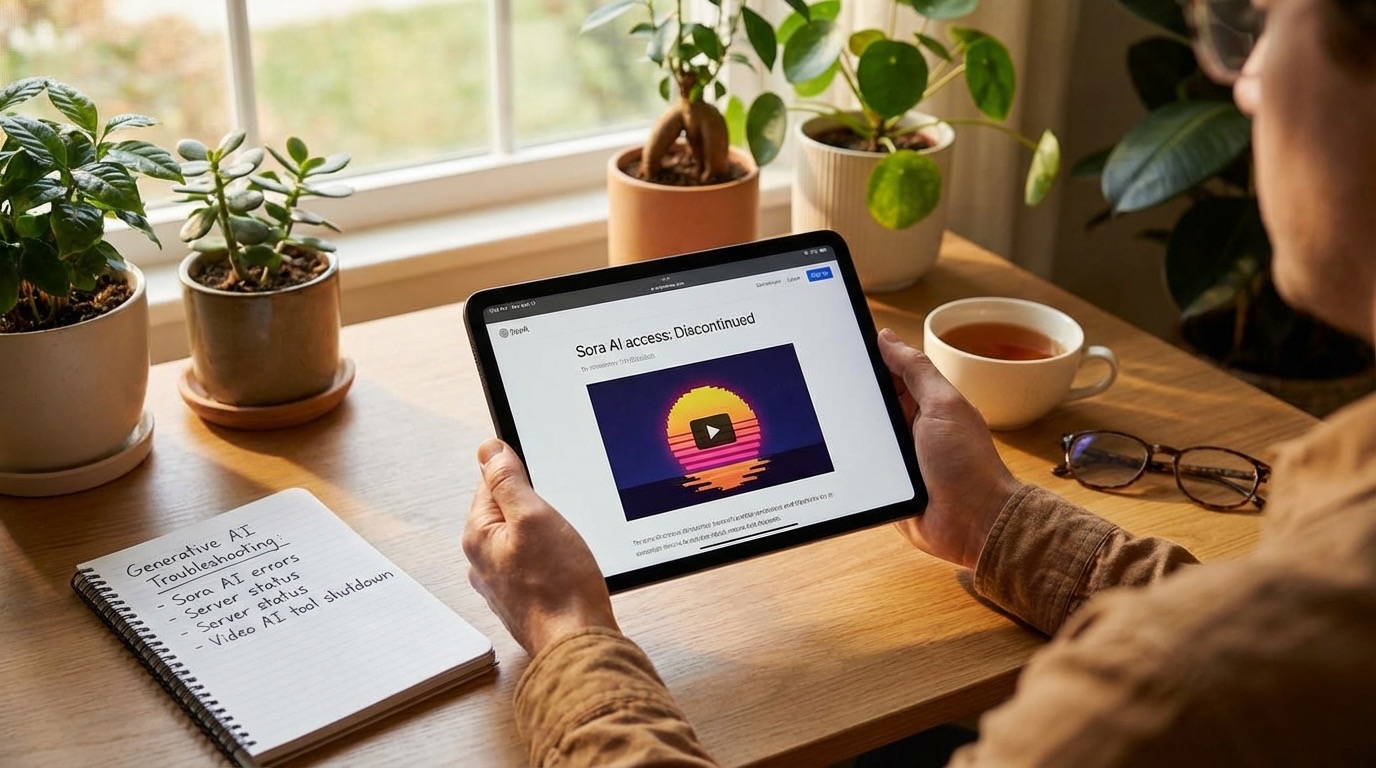
Imagine burning through a million dollars every single day just to keep a video tool running. That is the reality OpenAI faced with Sora, and now they are officially saying goodbye.
This massive video AI tool shutdown announced on March 24, 2026, has caught everyone by surprise, especially since Sora was supposed to be the next big thing for creators everywhere. If you have been dealing with Sora AI availability issues or checking the Sora AI server status because of OpenAI Sora access errors, you are seeing the beginning of the end. Between a global chip shortage and a big shift in company goals, OpenAI decided it just cannot afford the high price of generating video anymore. It is a major pivot that leaves many of us wondering where to go next.
We are going to look at why Sora is going away and what it means for your future projects. You will get the full story on the daily losses, the failed Disney deal, and some helpful Generative AI troubleshooting to help you export your data. It is time to see what the future of AI video really looks like once the hype fades away.
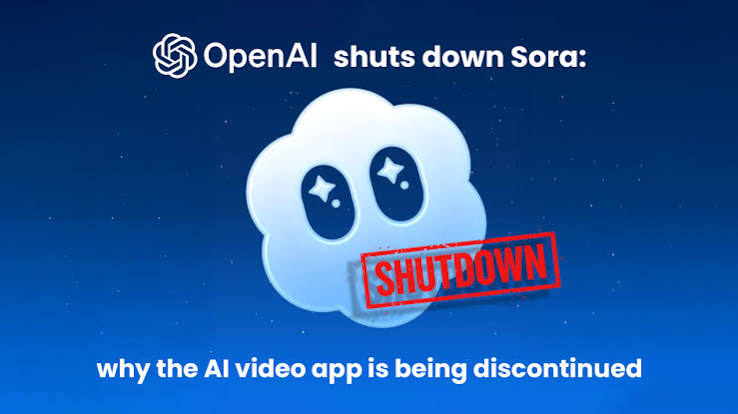
The Big Shutdown: What’s Actually Happening with Sora?
Sora was supposed to change movies forever, but it’s getting the axe. It started with a simple post on X: “We’re saying goodbye to Sora.” For a tool that once promised to change how we make movies, the end feels surprisingly quiet. OpenAI is officially pulling the plug on its video creation app and API on March 24, 2026.
If you’ve been seeing Sora AI errors or wondering about Sora AI server status, this is why—it’s a full exit. This isn’t just a minor tweak or a rebranding effort; it is a full-scale retreat from a market that turned out to be much more expensive than anyone expected.
Even a massive three-year partnership with Disney, which included a planned $1 billion investment, has been scrapped.Disney says they respect the decision to shift priorities, but the suddenness of the move has left the creative community reeling.
Why walk away from something so promising? Keeping Sora alive cost a staggering $1 million every day while serving fewer than 500,000 users. OpenAI decided the toy wasn’t worth the pounce. The math just stopped making sense.
Instead of chasing every laser pointer in the room, OpenAI is narrowing its focus before an IPO. They need to show investors they can be profitable, not just cool. They are cutting off OpenAI Sora access to double down on text and coding where competitors like Anthropic are winning over developers.
The Math Didn’t Add Up: Flawed Business Models & Hardware Limits
The business model was the main culprit behind this shutdown. Developers in the community say making Sora 2 free was a massive mistake that drained server resources during a global chip shortage. As developer Artur Lipinski pointed out, if you give away a product that costs a fortune to run, you are going to run out of runway eventually. Generating high-end video with synchronized audio is just too expensive to sustain right now.
Every time a user clicked generate, OpenAI was essentially burning cash to keep the servers humming. When you combine massive compute power with fewer than 500,000 users, those numbers do not add up without a massive, paying audience to offset costs.
A major part of this struggle came down to physical hardware. OpenAI’s head of Sora, Bill Peebles, had already been forced to limit how many videos users could make because of a global shortage of computer chips. There simply were not enough chips to go around. By shutting Sora down, OpenAI can take those chips and reallocate them to more reliable text and coding projects that enterprise businesses actually want to buy.
Then there is the environmental cost. Running large-scale video generation uses an enormous amount of energy and water for server cooling. As public scrutiny of AI energy consumption grows, maintaining a money-losing video app becomes harder to justify. By pulling the plug, OpenAI is cutting down on a massive energy burden that was becoming a liability.
Key Dates You Need to Know
If you have been using the tool, mark March 24, 2026 on your calendar. This is the hard deadline for everything Sora. OpenAI is pulling the plug on the video tool entirely, so you have until then to grab your data or finish your projects before user access vanishes completely.
The shutdown hits every corner of the service:
- The iOS App: Will stop working entirely.
- The API: Will go dark for developers, forcing those who built tools on top of the Sora API to pivot to a new partner.
- Server Data: Projects in progress or stored on OpenAI servers will vanish if not moved.
Generative AI Troubleshooting: Fixing Sora AI Access Errors
Tried to generate a video today only to find the door locked? If you are seeing Sora AI access denied or “Compute Limit Reached” errors, it isn’t a random server glitch or a problem with your internet connection.
These messages happen because OpenAI is actively pulling back hardware resources. Bill Peebles and the engineering team started rationing power long before the announcement to curb the $1 million daily burn. Many API keys have already been deactivated early as server clusters are reallocated to text and code models.
Troubleshooting Sora: Why You Can’t Get In Right Now
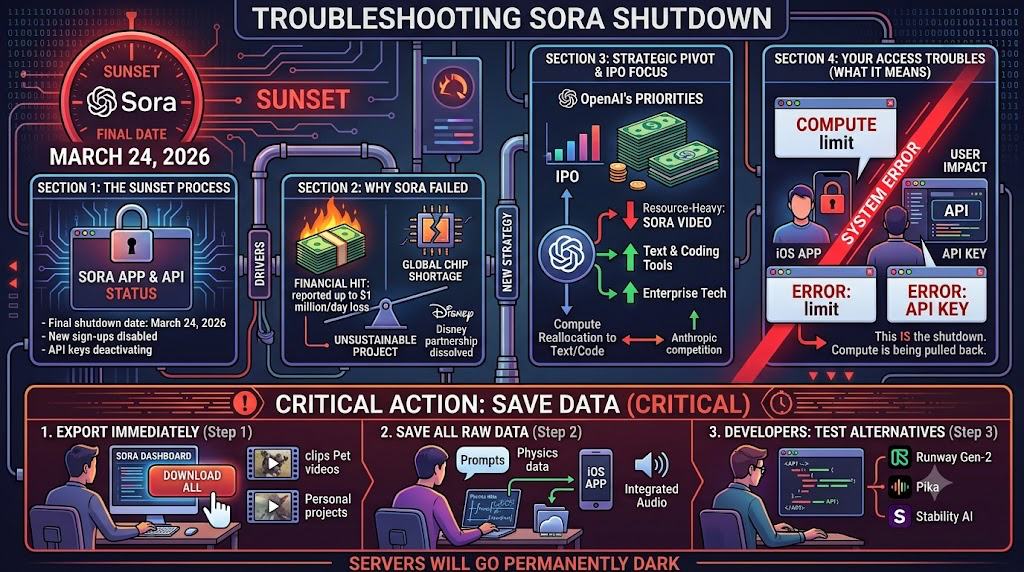
Tried to generate a video today only to find the door locked? You aren’t alone, and it isn’t just a temporary glitch. OpenAI has officially started the sunset process for Sora, with a final shutdown date set for March 24, 2026. This isn’t just a minor pivot; it’s a total shutdown of the app and API. The reality is that the service was bleeding cash, reportedly losing up to $1 million every day. When you combine those financial hits with the global shortage of computer chips, it’s easy to see why leadership decided the project wasn’t sustainable for the long haul.
The fallout has been swift and a little surprising for the 500,000 users who embraced the tool. Disney’s massive $1 billion partnership has already dissolved, and new sign-ups are completely disabled. OpenAI is currently prioritizing an upcoming IPO, which means they are shedding resource-heavy products that don’t have clear profit margins. By moving away from Sora, they can reallocate that precious compute power to text and coding tools where they face stiff competition from Anthropic. It’s a tough break for anyone who enjoyed creating AI content, but the company is betting its future on more reliable, less expensive enterprise tech.
If you are currently seeing “Compute Limit Reached” errors, think of it as a “closed” sign on the door. These messages aren’t about your internet connection; they happen because OpenAI is actively pulling back the hardware resources that once powered Sora’s video generation. Many API keys have already been deactivated, rendering third-party tools useless overnight. If you still have access to your dashboard, your first move should be exporting every single project you’ve made – especially those favorite clips of your pets or personal projects. Once the March deadline passes, those servers will go dark, and your work will be gone for good.
How to Handle Access Issues and Save Your Data:
- Export Immediately: Do not wait until the final cutoff. Log in to your iOS app or API dashboard and download every project you’ve created.
- Save Your Prompts & Physics Data: Save your high-quality Sora 2 clips with their integrated audio locally, as backend servers will go dark permanently.
- Switch API Providers: If you are a developer, begin testing alternative video generation APIs now to prevent app downtime.
Hollywood’s Cold Shoulder and the IPO Pivot
Why walk away from a $1 billion deal? Hollywood wasn’t entirely sold. The collapse of the Disney partnership showed that entertainment leaders and creators are concerned about copyright, deepfakes, and high production risks.
More importantly, OpenAI is looking toward its IPO. Investors prefer predictable enterprise profits over experimental, low-margin movie tools. While OpenAI was trying to master cinema, Anthropic stayed focused on reliable enterprise tech. This shift back to basics is a surrender to economic reality—showing that reliability for enterprise users beats out creative experimentation.
Frequently Asked Questions
When is the exact date Sora AI will stop working?
March 24, 2026. That is when OpenAI will shut down the Sora video app and API for good. Make sure you have saved all your work before then.
Why is OpenAI shutting down Sora if it was so popular?
It comes down to high costs and strategic priorities. Sora was losing $1 million a day with under 500,000 users.Combined with the chip shortage, a dissolved $1 billion Disney deal, and an upcoming IPO, OpenAI chose to prioritize profitable
Can I still download my videos before the server goes offline?
Yes, but you need to act fast. Once the deadline arrives, servers will go dark and access to your data will vanish. Log into the iOS app or dashboard and export your files today.
What should I do if I’m seeing ‘Sora AI access denied’ errors?
This error indicates server capacity is actively being scaled down. Hardware resources are being reallocated to other projects ahead of the shutdown, so try accessing your dashboard during off-peak hours to complete your data export.
Conclusion
The bottom line on the Sora shutdown is simple: even the most impressive tech needs to make financial sense. OpenAI is moving away from a tool that cost $1 million a day to run, choosing instead to focus on enterprise stability and a steady path toward their IPO.
If you are currently seeing Sora AI errors, you now know why. Export your work before the deadline, and prepare for a new era where AI tools focus on long-term sustainability rather than just short-term hype.
Related Post