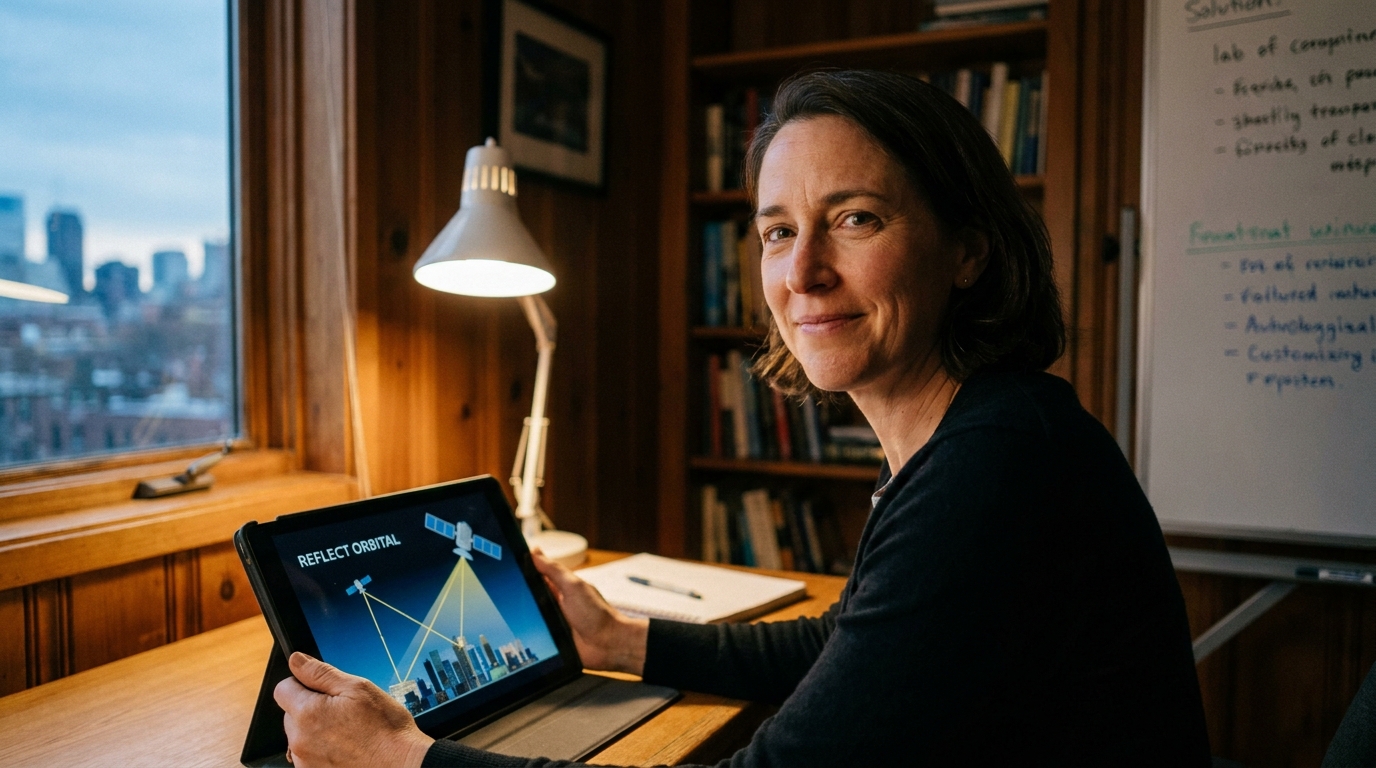
Imagine pulling out your phone at midnight and ordering a beam of pure sunshine to hit your backyard. It sounds like a plot from a sci-fi movie, but a California company called Reflect Orbital is working to make it real. This Startup: Buying Light from Space has already raised millions to launch a massive constellation of mirrors designed to bypass the sunset and keep the world bright.
While the idea of 24/7 solar power is exciting, it comes with a steep price and some serious questions about the environment impact on our planet. We are looking at a cost of $5,000 per hour for a single mirror, which means this probably isn't for a late night party or helping your cat find a toy in the dark. Instead, it targets solar farms that want to keep producing energy long after the sun goes down.
In this guide, we will break down how these space mirrors actually work and why groups like DarkSky International are sounding the alarm. You will learn about the technology behind the 180 foot mirrors and whether this project is the future of energy or just a bright distraction for our night sky.
The Wild Idea of Ordering Sunshine to Your GPS Coordinates
Imagine it is midnight in your backyard and you suddenly decide you want some sun. It sounds like a movie, but a California startup called Reflect Orbital is trying to make it happen. They want to let you log into a website, drop your GPS coordinates, and get a beam of sunlight delivered right to you after dark.
This Hawthorne-based team has already raised over $28 million to bypass the sunset. Their plan involves a massive fleet of 50,000 satellites by 2035. Right now, they are testing a prototype the size of a dorm fridge with a 60-foot mirror. This mirror orbits 400 miles up and reflects a three-mile wide patch of light back to Earth.
But how much will this cost? Lighting up a spot could run you $5,000 per hour under specific contracts. CEO Ben Nowack says the goal is to help solar farms keep working at night to replace fossil fuels. Still, critics worry about light pollution and wonder if the beam is actually bright enough to be useful.
Key insights:
- The startup aims to deploy 50,000 satellites to provide 24/7 solar energy by 2035.
- A single mirror can illuminate a circular patch of earth three miles wide.
- The business model relies on solar farms and high-premium emergency light services.
The Price Tag: Is $5,000 an Hour Worth It?
If you had $5,000 to spend in sixty minutes, what would you buy? For most of us, that is a vacation or a used car. But for Reflect Orbital, it is the price of an hour of sunlight after dark. This California-based startup has already raised over $28 million to make this happen. They are not just selling a novelty; they are selling a service where you log into a website, give your GPS coordinates, and wait for a 60-foot mirror to find you from 400 miles up. It sounds like science fiction, but the company is already testing prototypes the size of a dorm fridge to prove it works.
The $5,000 rate applies to specific annual contracts, but one-time events will likely cost even more. It is a steep price for a patch of light about three miles wide. Critics are already asking if a mirror this size can actually provide enough brightness to be useful. Some argue it won't even be brighter than a full moon, which isn't enough to jumpstart a solar panel. Plus, groups like DarkSky International worry about what this means for wildlife and our view of the stars. This matters because if we fill the sky with 50,000 satellites by 2035, the night might never be truly dark again.
So, who is actually going to pay for this? While rich event planners might want a sunny midnight wedding, the real money is in renewable energy. Solar farms are the biggest potential customers because their biggest problem is the sunset. If Reflect Orbital can extend their workday by reflecting light onto their panels after hours, these plants keep making money long after the sun goes down. It is a way to bridge the gap when the grid needs power the most but the sky is dark.
CEO Ben Nowack talks about a revenue-sharing model where the startup and energy providers split the gains. The goal is to eventually replace fossil fuels by making solar power a 24/7 reality. If these mirrors can keep the grid humming through the night, that $5,000 hourly fee starts to look like a small investment in a much larger energy shift. It is a bold gamble on the future of the planet, even if the technology still has a lot to prove to the skeptics who doubt it can actually power a city.
Key insights:
- The $5,000 hourly rate is primarily targeted at commercial energy providers through annual contracts rather than individual users.
- Solar farms could use the reflected light to generate electricity at night, potentially creating a new revenue stream for renewable energy.
- There is significant doubt among experts about whether the reflected light will be intense enough to actually activate solar panels.
- Dark sky advocates are concerned that a constellation of 50,000 mirrors will cause permanent light pollution and disrupt ecosystems.
Why Solar Farms Might Be the Biggest Customers
Imagine owning a massive solar farm where your business depends on a giant ball of fire that disappears for half the day. That is a lot of wasted potential. Reflect Orbital wants to change this by essentially extending the sun's shift. By reflecting light onto these panels after dark, they can keep green energy flowing when the grid often needs it most.
This is not just a science experiment but a specific business strategy. The Hawthorne-based startup plans to charge roughly $5,000 per hour for light from a single mirror. While that sounds expensive, the plan involves a revenue-sharing model with the energy providers. Because they have already raised over $28 million, investors are betting that this extra light will make solar farms much more profitable than they are today.
The big goal here is to replace fossil fuels entirely. CEO Ben Nowack believes this technology could eventually power everything. By 2035, they hope to have 50,000 satellites in orbit. Even a small prototype can light up a three-mile wide area, proving that a little extra sunshine might be all we need to keep the lights on without relying on coal or gas.
Key insights:
- Solar farms can stay productive at night through a revenue-sharing model with the startup.
- The company aims for 50,000 satellites by 2035 to provide a consistent alternative to fossil fuels.
- Each mirror prototype can target a specific three-mile wide area based on GPS coordinates.
How 50,000 Mirrors in Space Actually Work
How do you actually sell sunlight when the sun is on the other side of the planet? Reflect Orbital, a startup based in Hawthorne, California, thinks the answer lies in a fleet of 50,000 satellites. By 2035, they want to have these mirrors orbiting 400 miles above your head, ready to catch rays and bounce them back down to Earth. It sounds like sci-fi, but with over $28 million in funding, investors are betting this could be a real way to keep solar farms running long after twilight.
The tech starts small but aims big. Right now, the prototype is about the size of a dorm fridge and carries a 60-foot square mirror. Eventually, these will grow into giant 180-foot reflectors designed to hit a specific three-mile wide target on the ground. Think about that precision. A mirror hundreds of miles away, moving at thousands of miles per hour, has to keep a steady beam of light on a single solar farm. CEO Ben Nowack says the mission is to replace fossil fuels by making solar power a 24/7 reality.
But here is where things get tricky. While the vision is to log onto a website and order sunlight via GPS, the current 60-foot mirrors face a brightness problem. Skeptics point out that reflecting light from that high up might only result in a glow similar to a full moon. That is nice for a late-night walk, but it is not enough to actually kickstart a solar panel. There is also the huge challenge of keeping these satellites perfectly positioned so the light does not just wander off into the woods.
Then there is the cost. If you want to light up a specific spot, it could cost roughly $5,000 per hour under certain contracts. For a big energy company, that might be a deal if it keeps the grid stable. But for the rest of us, it raises questions about who owns the night sky. Dark sky advocates are already worried about how 50,000 glowing dots will affect wildlife and our view of the stars. It is a bold plan, but we are still waiting to see if the reality matches the hype.
Key insights:
- The 2035 goal requires 50,000 satellites, a massive jump from current prototype testing.
- Current mirrors may only provide full-moon levels of light, which is insufficient for most industrial solar needs.
- At $5,000 per hour, the service is positioned as a premium energy or emergency resource rather than a consumer product.
- Dark sky advocates view the constellation as a significant new source of light pollution that could disrupt ecosystems.
The Prototype vs. The Vision
Think about a satellite the size of a dorm fridge floating 400 miles above your head. It sounds like a science project, but Reflect Orbital has already convinced investors to the tune of $28 million. Right now, their prototype uses a 60-foot square mirror to bounce sunlight down to a three-mile-wide patch on Earth. It is a bold start, but the gap between one fridge-sized satellite and the 50,000 they want by 2035 is massive.
Here is where things get tricky. Keeping a mirror perfectly angled while moving at thousands of miles per hour is a logistical nightmare. If the positioning is off by even a fraction, that expensive light misses the target entirely. Critics are also pointing out a bit of a dim reality: even if it works, the reflected light might only be as bright as a full moon. That is great for a late-night walk, but is it enough to actually power a solar farm or justify a $5,000 hourly fee?
CEO Ben Nowack believes this could eventually replace fossil fuels by providing 24/7 solar power. But for now, we are looking at a vision that is much brighter than the current hardware can deliver. We have to wonder if a three-mile glow is a revolution or just an expensive flashlight in the sky.
Key insights:
- The current prototype is roughly the size of a dorm fridge but carries a 60-foot mirror.
- Precision is everything, as maintaining a perfect orbit 400 miles up is incredibly difficult.
- Skeptics argue that full-moon brightness is not enough to trigger industrial solar panels.
The Catch: Why Astronomers and Nature Lovers Are Worried
While the idea of ordering sunlight to your GPS coordinates sounds like magic, it comes with a heavy price that isn't listed on a receipt. For astronomers and nature lovers, this technology represents a massive threat to our remaining dark skies. DarkSky International has already pointed out that artificial light at night does more than just hide the stars. It actually disrupts the biological clocks of wildlife and humans alike. Imagine a world where the natural rhythm of day and night is replaced by a commercial schedule.
The scale of this project is what really worries experts. Reflect Orbital is based in Hawthorne, California, and they have already raised more than $28 million to get their mirrors into orbit. Their goal is to have a constellation of 50,000 satellites by 2035. Even if these mirrors only produce the brightness of a full moon, having thousands of them reflecting light back to Earth could create a constant glow in the atmosphere. This makes it nearly impossible for researchers to study the deep reaches of space.
Regulating these space mirrors is a whole different ball game compared to ground based lights. Because these satellites sit about 400 miles up, they aren't bound by local noise or light ordinances. There is a real fear that certain regions could experience a permanent twilight where the sky never truly gets dark. This is why there is growing pressure on the FCC to create stricter rules for orbital illumination before the sky becomes a billboard of reflected sunbeams.
It is also worth considering the cost and the purpose behind this. At roughly $5,000 per hour, this isn't a service for the average person. It is a high cost tool for solar farms or special events. But while the profits go to a startup, the loss of the night sky is something we all experience together. We have to decide if the ability to buy an extra hour of light is worth the cost of losing our connection to the stars.
Key insights:
- DarkSky International warns that orbital light pollution disrupts both human health and wildlife migration patterns.
- The sheer volume of 50,000 planned satellites could create a permanent hazy glow that blocks out astronomical observations.
- Current regulations for ground lights do not apply to space, leaving the FCC as the primary body facing pressure to act.
- The high price point of $5,000 per hour suggests the service is for commercial entities, though the environmental impact affects everyone.
Light Pollution from Above
Imagine looking up and never seeing the stars again. While we can dim a streetlamp, how do you turn off a mirror orbiting 400 miles up? That is the headache facing regulators as companies like Reflect Orbital aim for a 50,000-satellite constellation by 2035. Unlike your neighbor’s porch light, space-based illumination doesn't stop at the property line. It crosses borders and oceans, making it a nightmare to govern.
There is a real fear that we are heading toward a permanent twilight in certain areas. DarkSky International is already sounding the alarm because this constant glow messes with wildlife and human sleep cycles. If you think a bright moon is distracting, imagine 180-foot mirrors reflecting sunlight on demand for $5,000 an hour. It is no wonder people are pushing the FCC to step in before our night sky becomes a giant, glowing billboard.
Key insights:
- Space mirrors are harder to regulate because their light crosses international borders instantly.
- Dark sky advocates warn that a 50,000-satellite fleet could create a permanent twilight that disrupts ecosystems.
- Pressure is mounting on the FCC to create new rules for orbital brightness before commercial services launch.
Is This the Future of Energy or Just a Bright Distraction?
Imagine standing in a solar farm at midnight while the sun suddenly starts shining. This is the core of Ben Nowack’s plan for Reflect Orbital. Based in Hawthorne, California, this startup wants to fix the biggest flaw in solar power: it disappears when the sun goes down. They have already raised $28 million to prove that we can reflect sunlight back to Earth using satellites. The goal is a massive constellation of 50,000 mirrors by 2035, turning solar energy into a 24/7 resource.
But is this actually better than just buying a big battery? At $5,000 per hour, space light is a premium service. While batteries store energy during the day, these mirrors would provide it live. However, the physics are tricky. A prototype mirror about 60 feet wide is currently being tested, but some experts worry the reflected light will be too weak. If the glow is only as bright as a full moon, it won't actually trigger the chemical reaction needed for solar panels to generate electricity.
There is also the human side of the story. While Nowack dreams of a world powered entirely by the sun, dark sky advocates see a nightmare. They argue that filling the sky with 50,000 bright satellites will ruin the night for everyone, affecting everything from bird migrations to human sleep patterns. It is a fascinating tension between our need for clean energy and our right to a dark sky. For now, the idea of ordering sunlight via a web interface remains a high-priced experiment that could either change everything or simply fade away.
Key insights:
- The service costs $5,000 per hour, making it a high-end alternative to traditional energy storage.
- Critics argue the reflected light might not be intense enough to actually power solar panels.
- A massive fleet of 50,000 satellites could significantly increase global light pollution.
Common Questions About Buying Light from Space
Ever wished you could just flip a switch and bring the sun back after it sets? Reflect Orbital wants to make that a reality through a web interface where you just drop your GPS coordinates. But do not expect a second daytime. What you are actually buying is reflected light, concentrated onto a three-mile-wide patch of ground. Think of it as a very bright, distant spotlight rather than a true extension of the afternoon. It is a focused beam designed for specific spots on the surface.
The price tag is just as high as the satellites themselves. Under specific annual contracts, you are looking at roughly $5,000 for every hour of light from a single mirror. This isn't just for late-night garden parties, though. The California-based startup has already raised over $28 million to help solar farms keep producing energy long after dark. It is a massive project, but we are still in the early stages. Right now, their prototype is about the size of a dorm fridge with a 60-foot mirror.
So, when can you actually book your slot? The company aims to have a full constellation of 50,000 satellites in orbit by 2035. That is a huge goal, and not everyone is on board. Many experts worry about light pollution affecting wildlife, while others doubt if a reflected beam can even trigger solar panels effectively. While the CEO believes this could eventually replace fossil fuels, we still have a decade of testing and debate to get through before the night sky changes for good.
Key insights:
- Reflected light provides a focused 3-mile wide beam rather than true ambient daylight.
- The commercial service targets a massive 50,000-satellite constellation by 2035.
- Current costs hover around $5,000 per hour for specialized energy contracts.
Frequently Asked Questions
How bright is the light from an orbital mirror actually going to be?
It is not going to be like having a second sun in the sky. Right now, there is a lot of debate about how much light these mirrors can really send down to us.
While the company wants to help power the planet, many experts are skeptical. Some people point out that even the light from a full moon is not strong enough to jumpstart solar panels, and these mirrors might only reach that level of brightness. The first prototype uses a 60 foot mirror to light up a patch of ground about three miles wide, so you can expect a noticeable glow rather than blinding daylight.
Here is the thing to remember: the tech is still in the early stages, so the actual luminosity might change as the mirrors get bigger.
Can I order a beam of light to my house for a party?
In theory, yes, that is exactly what the startup wants you to do. The CEO envisions a world where you just log into a website, share your GPS coordinates, and get a bit of extra sunshine after the sun goes down.
But before you start planning your midnight garden party, you should look at the price tag. It is expected to cost around $5,000 for just one hour of light, and that is usually for customers who sign a long term contract. It is a pretty steep price for a birthday bash.
Also, there are only a few prototypes right now. With the full fleet of 50,000 satellites not expected until 2035, it might be a while before this service is ready for casual home use.
Will these satellites be visible to the naked eye from the ground?
You'll definitely notice the light they beam down, since that's the whole goal. The company is aiming to create a circle of sunlight about three miles wide on the ground. If you're standing in that spot, it'll be like a patch of day in the middle of the night.
From outside that circle, the satellites themselves will likely look like bright, fast-moving stars because they're orbiting about 400 miles up. Each one has a mirror between 60 and 180 feet wide, so they'll be hard to miss if you're looking up at the right time.
Does reflected sunlight at night hurt the environment?
This is a major sticking point for the project. Groups like DarkSky International already see these satellites as a source of light pollution. Nature depends on the dark, so adding extra light at night can confuse migrating birds and mess with how animals hunt.
It's not just about wildlife, though. Humans need dark nights for health, and astronomers are worried that having 50,000 mirrors in the sky will make it much harder to study the stars. While the company wants to help the planet by boosting solar power, many experts worry about the cost of losing our natural night sky.
Conclusion
Reflect Orbital is trying to do something that sounds like a movie plot: selling sunshine at midnight. We have seen that while the tech is fascinating, the $5,000 hourly price tag and the plan for 50,000 mirrors make this a high-stakes gamble for the startup. It is about more than just a cool app; it is a massive shift in how we might power our world and extend the reach of solar energy.
But this vision of a 24/7 solar world comes with real trade-offs. The environment impact on our dark skies and wildlife is a heavy price to pay for extra light. As these satellites move from prototypes to a full constellation, the debate between progress and preservation is only going to get brighter.
For now, the smartest move is to keep an eye on the horizon and see if they can actually deliver. Whether this becomes a vital energy tool or just a high-priced luxury for parties, it forces us to rethink what natural light really means. This startup: buying light from space might change the way we look at the night, but remember that while sunlight is for sale, the stars are still priceless.